Home › Community Response › Participatory Research & People's Planning
Participatory Research & People's Planning
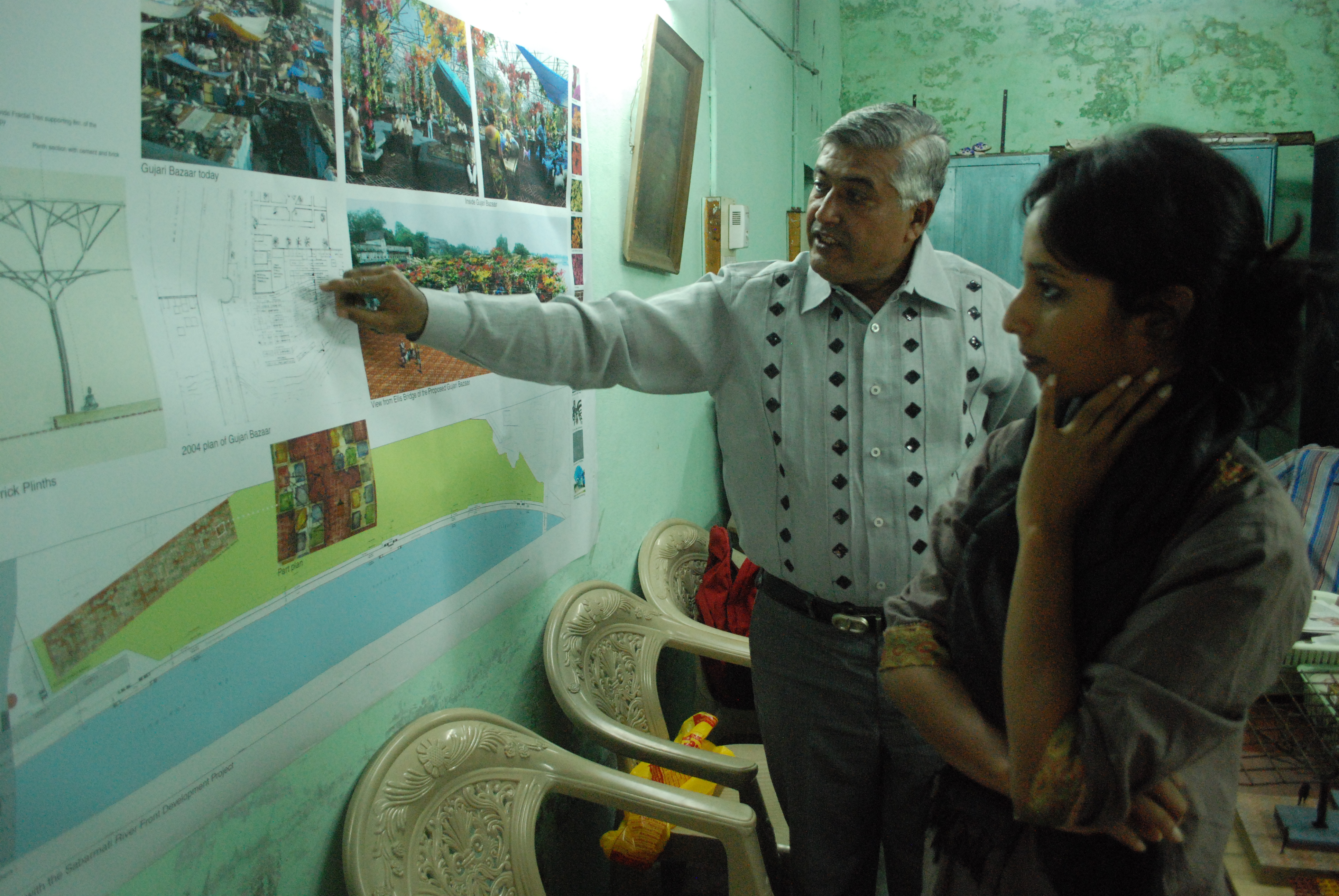
After the initial research and documentation previously carried out by the IIMA team, through the relationship of trust and service between the IIMA faculty, students and researchers and the representatives of the market traders, the custodians of the market’s heritage and its place in the contemporary transformation in Ahmedabad, the team assists in the efforts of the traders to protect the market while investing significantly in its upgradation and modernization. The IIMA team partnered with several internationally-prestigious local institutions to present a petition to the UNESCO for assistance in the protection of the market. This petition of the market traders included signatories from the CEPT University, the National Institute of Design (NID), Action Aid, Shelter Rights Forum, Gujarat University HL Arts College, Budhan Theatre and the Indian Institute of Management Ahmedabad (IIMA). Further, it partnered with faculty and students at NID to institute a process whereby the market traders could self-develop a modernization plan for their market. The UNESCO Director acted on the petition and sent a letter (read the letter) to the Municipal Commissioner of Ahmedabad to aid in these development and protection efforts. However, a different vision was being instituted on the Riverfront that did not include the Gujari Market, and no assistance came from the local government.
In due course the IIMA team partnered with socially-oriented space designers and faculty from the prestigious National Institute of Design, Ahmedabad to conduct a community design and planning process for the upgradation of the market. This process has been entirely based at the market and it is significant contribution to the market’s improvement and to stake its claim in the city’s future. Through participatory-communication techniques and visual and physical tools facilitated by the IIMA and NID teams, a modern, upgraded design was finalized by the Gujari market Association. This design was presented to various government officials dealing with the Riverfront project, however the market association received no further communication from the local government regarding the future of those plans.
The IIMA and NID team further organized a city-wide workshop at IIMA where the Gujari Market Association presented their alternative modernization and rehabilitation plan to the public, using sophisticated digital models, printed panels, displays and their own narratives of the participatory design and planning process. This process received great public acclaim for its innovativeness and how it illustrated the creativity of ordinary people in designing a socially-relevant and sophisticated urban development plan. However, under the guise of electoral rules ina distant part of Ahmedabad, the local government sought to shut down this presentation and sent armed police and district official to video-record the proceeding and close-ups of participants’ faces. Institutional copyright laws prevented them from saving such footage, and sans any official permission, they were politely let out of the IIMA’s premises. (box with news coverage and attached documents)
The proposal for the Sabarmati Riverfront Development Project submitted by a private agency (Environmental Planning Collaborative) employed by the Municipal Corporation, proposed revisiting the feasibility of the current Gujari Market, with the charge that it did not have adequate facilities for the upper income groups.
In the absence of an official plan to rehabilitate the market of such significance and reports about its imminent eviction in the media and rejection of its appeal in court, the Ahmedabad Gujari Association has instituted a community planning process involving its office bearers and member-traders.
The design support’s key framework consists of 3 main elements:
The first element is the priority of needs of the market traders as key to the process of upgradation and the primary need is to rehabilitate the market at its current site, in addition to further using the area left vacant by the shifting of informal settlements to rehabilitation housing. This plan therefore is an In-Situ Rehabilitation and Upgradation Plan, which seeks to integrate the market with other adjacent buildings in a symbiotic way. The community of traders is the bearer of its own economic and cultural knowledge, and it is this knowledge that can provide a way forward for a sustainable and successful rehabilitation.
The second element is that modernization and upgradation will be done according to contemporary global standards of regularly functioning open markets. Such markets are greatly supported by the public in advanced democracies through conservation and investment by governments.
The third element is a mechanism of governance that goes along to provide security of future tenure and establish a symbiotic relationship with the governance institutions of the city. The design facilitator’s task therefore involves the transformation of the perspectives of the community with regard to upgradation of facilities, organizing spaces to accommodate all the variety of traders in a manner that is easy to traverse for both buyers and sellers, provision of amenities that appeal to the public and to improve the shelter quality of the market.
Participatory Design Processrn
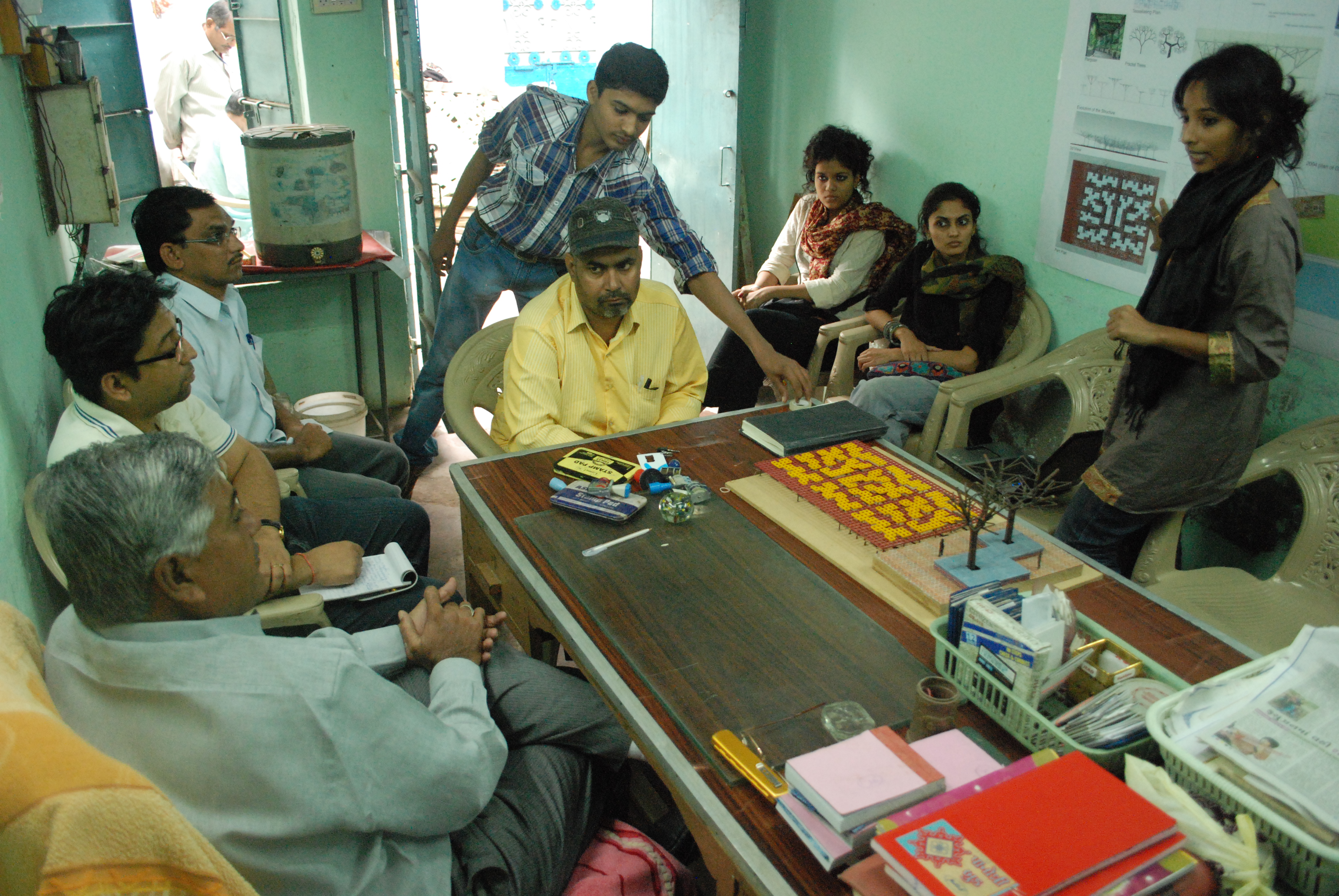
With the help of a community design process driven through research and documentation, a new design for Gujari Bazaar was developed. The people of the market themselves were involved in setting the norms for the design. This process has been entirely based at the market and it represents their effort for improvement, to stake their claim in our city’s future. The basis for a participatory process rests upon movements in the underlying practices of Planning and Public Policy.
The closely connected fields of planning and public policy have undergone remarkable transformation in the past two decades. Primarily driven by theoretical analysis of failures of technocratic forms of decision-making, alternative frameworks based on democratic practice and civic participation have gained greater currency. Starting with Rittel and Webber's (1973) path-breaking work (read the paper) on ‘wicked problems’ demonstrating that planning and public policy are inherently and intensely political activities, widespread empirical evidence in both developed and developing countries show a proclivity towards democratic reforms that seek to empower citizens and re-balance the authority of elitist hierarchical institutions. From citizens juries, consensus conferences, participatory budgeting to social audits, user-based compliance monitoring, public hearings and social assessments, a vast myriad of democratic practices has enriched the multi-level decision process in progressive democracies. With such rigorous support, a participatory workshop and citizens’ jury was organized to widen the scope of deliberations about the significance of the Gujari Bazaar.
This panel discussion was set in the context of urban renewal in Ahmedabad, specifically rooted in the ongoing conflicts around the displacement of habitat and livelihoods of the vast population of the poor, informalized citizens of Ahmedabad. At the core of this panel discussion was a significant symbol of Ahmedabad's social and economic heritage - The Ahmedabad Gujari Bazaar or the Sunday Market. The starting point of the discussion was the centuries old elected association (founded in 1414) or Ahmedabad Gujari Association (AGA) that governs the market, has been excluded in the formulation of the Sabarmati Riverfront Development Project for 13 years, with no official plan for their relocation made public or available to them. As an outcome of the collaborative research coordinated by IIMA, the AGA has initiated a community planning process to design their own modernization and upgradation plan facilitated by experts from NID Ahmedabad. The AGA team assisted by researchers and designers would like to present their 'community plan' and describe the participatory process undertaken to protect and conserve a vital part of the city's heritage that finds little mention in the broader celebrations of Ahmedabad's 600th birthday. Through this presentation, they seek constructive comments and participation towards further improvement and finalization of their community plan. This also seeks to raise public discussion about the acceptance of a democratic practice of planning in Ahmedabad's future imagination as a mega-city and growing conflicts about rights to public resources and public space.
Projects like the shifting of the Gujari bazaar, a heritage activity of the city, should be re-examined by the AMC with the participation of the traders. The AMC should explore the possibilities of grafting and integrating the site in a manner that does not displace and break the links between several livelihood chains that come together in the making, transporting and sale of goods at the current market site. An abrupt capture of the site will dislodge the livelihood of nearly 20,000 households linked directly and indirectly with this market. This is more so because Gujari is a self managed bazaar, which has survived vagaries of time and the AMC should respect such institutions than destroy them. City planning should respect the culture and heritage of the city. For instance, Gujari Bazaar is the city’s living heritage and this aspect should be respected and revitalized.
Part of the Gujari Bazaar record · originally published 2011–2013 · site restored 2026