Home › Community Response › Local Action
Local Action
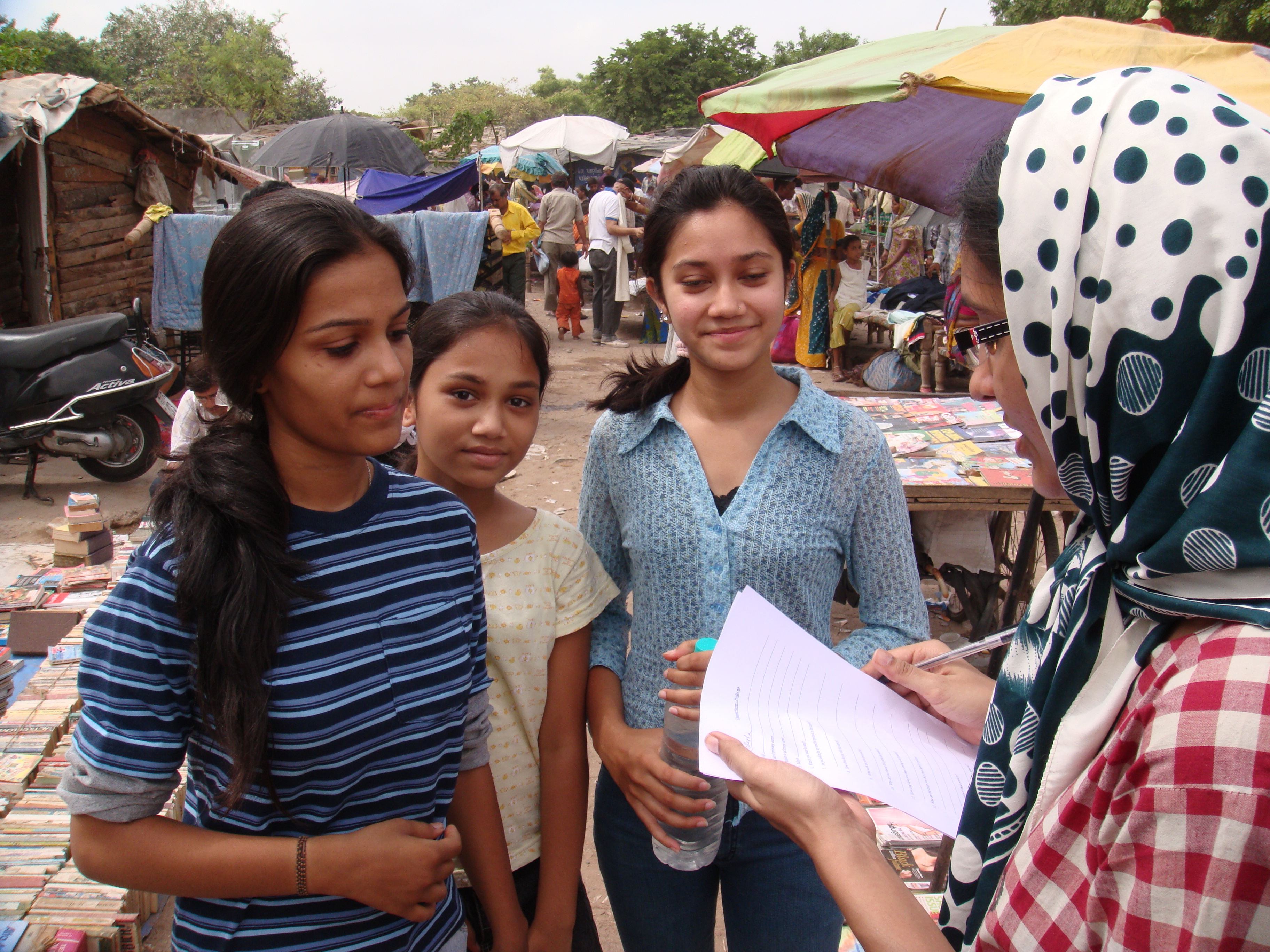
Several local institutions and organizations have been involved in seeking to create awareness about the plight of the Historic Gujari Bazaar, since the start of the implementation of the Sabarmati Riverfront Development Project. From seeking of information, writing petitions to local authorities, organization of workshops and discussions in academic fora, conducting architectural studios, public hearings, exhibitions, the performance of plays, research and documentation, legal interventions, representations to UNESCO and other international bodies to the preparation of a community-based alternative through a participatory research and design process – many different options have been exercised. However, in sum, the implementing agency and its planning consultants have chosen not to engage in any meaningful manner with the Ahmedabad Gujari Association.
And till mid-October 2011, only a public interest litigation filed by the market association prevention the outright eviction of the Gujari Bazaar. Formally, the Gujari Bazaar had been served prior legal eviction orders to vacate the riverbank space for the Sabarmati Riverfront Development Project, and no alternative plan for the market was made available or discussed in the public sphere or even privately with the Ahmedabad Gujari Association by any planning consultant or official on behalf of the Sabarmati Riverfront Development Company.
Most recently, the struggle of the Gujari Bazaar’s traders has been articulated in the form of a Public Interest Litigation filed in the Gujarat High Court in April 2011 to prevent any further threat to the market from the Sabarmati Riverfront Development Project and to institute an open and transparent decision process to rehabilitate market. The Chief Justice responded to this public litigation by ordering the local government to desist from any further extraction of space from the market and to present its rehabilitation plans for the market to the Court and the public for review. Till 15 October 2011, no response from the local government or the implementing agency has been received by the court nor has an alternative rehabilitation plan been made available publicly.
In 2004, a play “Suno! Nadi kya kehti hai” was denied permission by the government censor agency to be staged in Ahmedabad. The play sought to open up conversations on how the Sabarmati Riverfront Project affected the habitat and livelihoods of thousands of families who lived and worked along the vast stretches of the riverbanks of the Sabarmati in Ahmedabad. However, the play was staged elsewhere in the country, and widely acclaimed for bringing issues of elitist urban planning, as well as censorship into central focus in a development discourse that had become remarkably exclusionary especially signified by the metaphor of ‘India Shining’, while hundreds of thousands of farmers and farm workers were committing suicide, and millions of people were moving into hostile cities. Highlighting the ironies of this double displacement in Ahmedabad, the play provided insights into the nature of local governance in Ahmedabad and exclusions practiced by this form of urban planning that were backed by powerful real estate interests.
In 2005, many social activists, non-profit agencies and community residents collaborated to form the Sabarmati Nagrik Adhikar Manch (Sabarmati Residents Rights Forum) that submitted a Public Interest Litigation to the Gujarat High Court, to plead for a comprehensive policy of rehabilitation (as till then no rehabilitation plans had been publicly declared, 8 years after the Sabarmati Riverfront Development Project was granted government permission). However, markets and livelihood spaces were not especially highlighted in this public litigation, and the focus was exclusively on habitat.
In 2007, Renu Desai, then a doctoral scholar of Urban Planning at University of California Berkeley, who had conducted extensive research on the Sabarmati Riverfront Project, presented her findings in a conference paper (published recently) that showed tremendous inconsistencies in the planning process and the lack of a rehabilitation policy for the riverfront in Ahmedabad.
Several academic study programmes also were conducted on this topic. CEPT university held a studio at the Gujari Bazaar, mainly reflecting on how processes of urban design can be made more democratic, open and transparent, and most importantly how they can involve the very people urban planning seeks to serve.
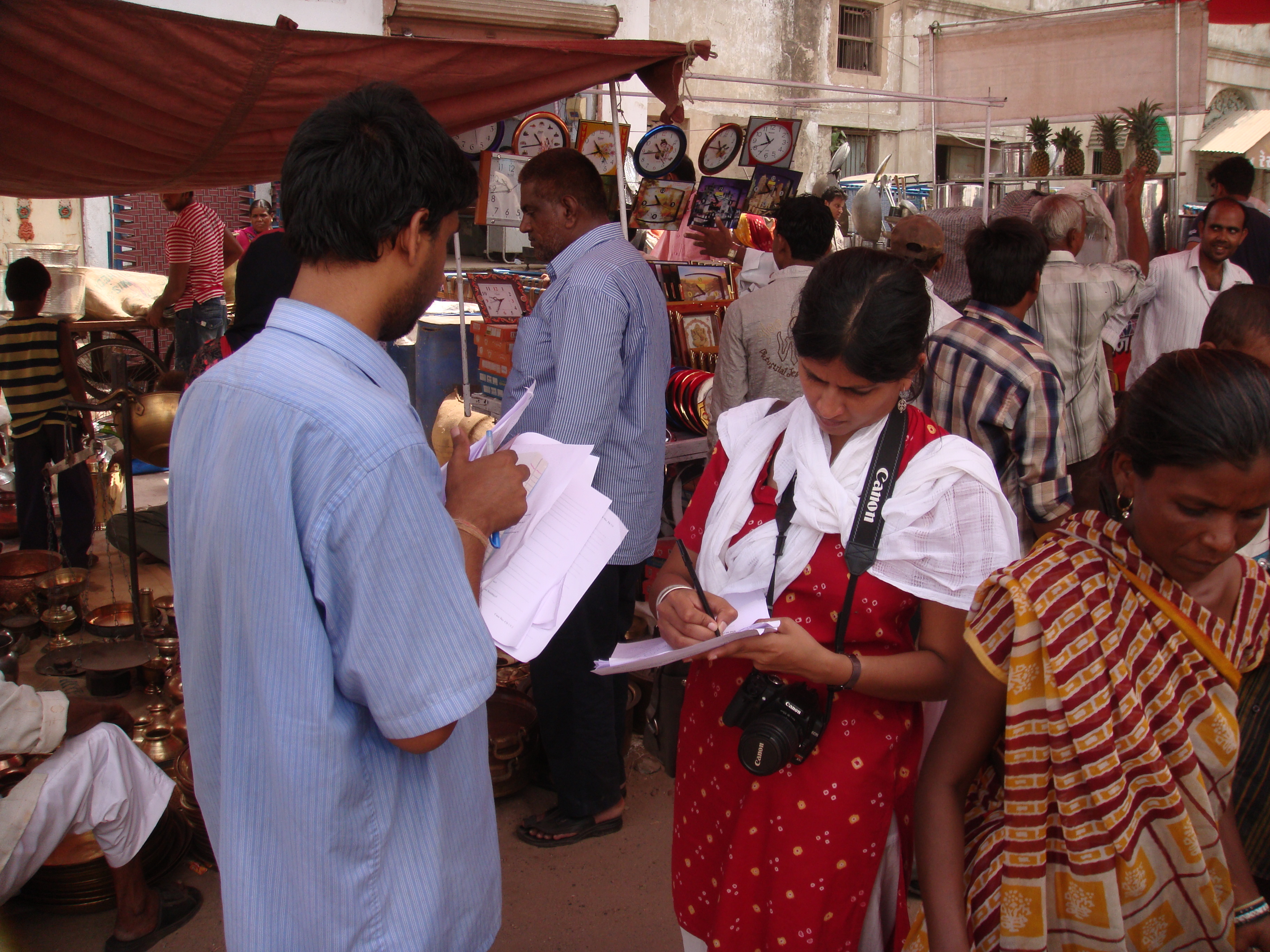
At the Indian Institute of Management, Ahmedabad, under public policy courses field visits were conducted by students of the MBA programme as well as participants of the Public Management Programme (these latter participants were mainly public officials undertaking studies as part of their training) to understand the relationship of urban infrastructure policies, planning practices and the experiences of the vast swaths of target populations. Documentation and research carried out by these participants was shared with all the different official actors involved in urban governance in Ahmedabad.
The Ahmedabad Gujari Bazaar Association also engaged in the dissemination discussions and found that no official policy or plan existed with regard to the market, in fact given the legal notices served to them, realized that the market had not found a place in the elaborate vision of the Sabarmati Riverfront development Project. They initiated a student project in April 2009 to help documentation of the market’s significance in order to appeal for inclusion in the city’s modernization plans. Overtime, the AGA initiated a collaborative set of activities engaging students and professors of IIM, NID, CEPT, MICA, along with many community groups and non-profit agencies such as SEWA, Unnati, St. Xavier’s Social Service Trust, Budhan Theatre, Bharatiya Muslim Mahila Andolan, ActionAid, Shelter Rights Forum Ahmedabad that resulted in a multi-lingual film about evictions and displacement of the habitat and livelihoods of the poor in Ahmedabad, a large workshop at IIM that sought to engage with local policymakers, planning consultants, agency officials and board members of the Sabarmati project, and a whole host of academicians, social workers, human rights lawyers, urban policy experts, and members of several communities who had been displaced or were under threat of eviction due to the project. Further a large group of concerned citizens were formed, spearheaded by a prominent professor of urban planning at CEPT university, that conducted a public hearing in December 2009, where testimonies narrating the experiences of displaced communities were presented to a jury of eminent citizens of Ahmedabad. Shortly, after this public hearing, the Gujarat High Court acted on the public litigation for rehabilitation of habitat and ordered the Municipal Corporation to submit a rehabilitation plan to the court before any more evictions. The court further ordered the creation of a committee of government officials and academic experts to monitor the rehabilitation process. While the rehabilitation plans were being made and slowly implemented over the course of the next year, no assurance about the Gujari Bazaar’s rehabilitation was made.
Legally the Bazaar had been served eviction orders, and had lost their appeal in the court to not be evicted. Through the efforts of human rights lawyer Bhushan Oza, they won the right to appeal again, and followed this up with asking for official information under the Right to Information Act 2005.
The Association filed requests under the Right to Information Act to gain access to any rehabilitation plan that the project agency might have developed. However, apart from verbal assurances (which under the legal eviction scenario did not strike the association as particularly trustworthy), no alternative plan was provided to the Association, or declared in the public sphere.
The Association was further supported by a human rights’ lawyer in pleading for the right to another appeal against the eviction orders, in the High Court of Gujarat State. Oza successfully won this right to appeal on behalf of the market traders.
Further the traders association initiated a participatory process for creating an alternative, community-based modernization plan and sought support from the National Institute of Design and IIM Ahmedabad.
Part of the Gujari Bazaar record · originally published 2011–2013 · site restored 2026