Home › Operations › Trading Methods & Displays
Trading Methods & Displays
By 5:30 AM, the vendors of Gujari Bazaar come to the market and display their goods in various different ways depending on what they sell and where they come from. Lasting until dusk, the market, its traders and customers adapt to the variety of Ahmedabad’s seasonal conditions.
Hand Cart
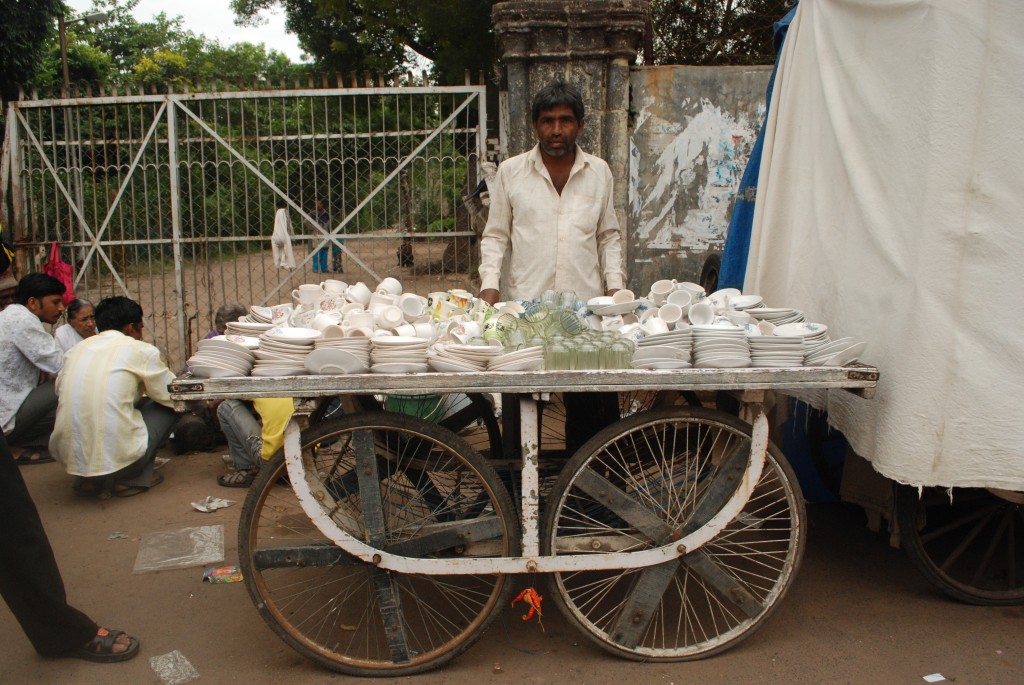 Assembly: Wood carrying surface supported by steel frame and bicycle wheels. Variations include attached bicycle transport and hitch for animals.
Application: Used to transport goods to the market and to display goods for sale inside the market. Vendors do not require separate equipment for transport and display.
Interaction: Vendors sit around on stools, stand or sit on the cart itself. People can stand around the cart on all 4 sides to look and buy the goods.
Products Sold: Small goods are sold on the cart. Food is also sold on the cart. Vendors customize their carts to suit their needs. The carts themselves are available as products to be bought at the market.
Location: Used all over the market.
Charpai
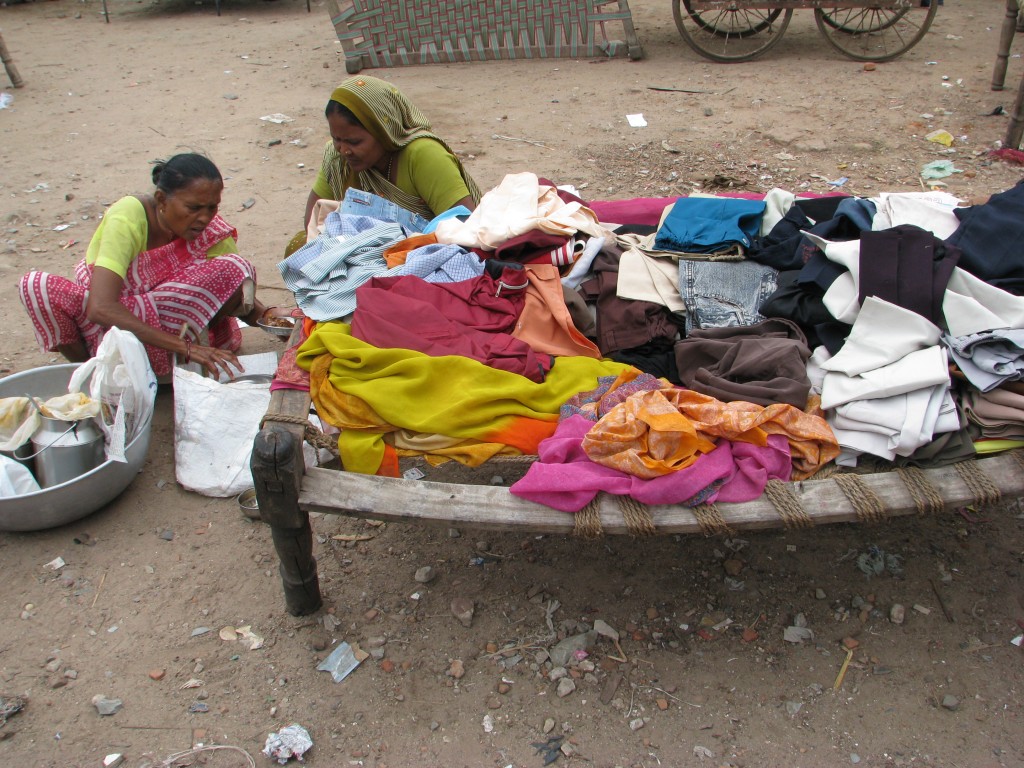 Assembly: Wood or steel framed bed/lounger, with woven base.
Application: Used in the market to display goods.
Interaction: Vendors sit on the Charpai, on a stool next to it or on the ground. The vendors sit in a row, leaning against the side walls of Ellis Bridge. Thus, customers interact from the one unoccupied side.
Products Sold: Second hand clothes and utensils. The charpais were rented from neighborhood residents whose houses are at an adjacent site. This neighborhood was demolished in May 2011, and residents were evicted to make space for the SRFDP. Renting the charpais is no longer an option for traders. Now, sellers formerly using charpais use cloth or plastic sheets on the ground upon which they spread their wares. Otherwise they must purchase charpais from the market.
Location: These charpais are mostly found along the edge of the slope connecting the main market to the main road. They are also found where clothes are sold (close to the now evicted neighborhoods).
Ground Covering
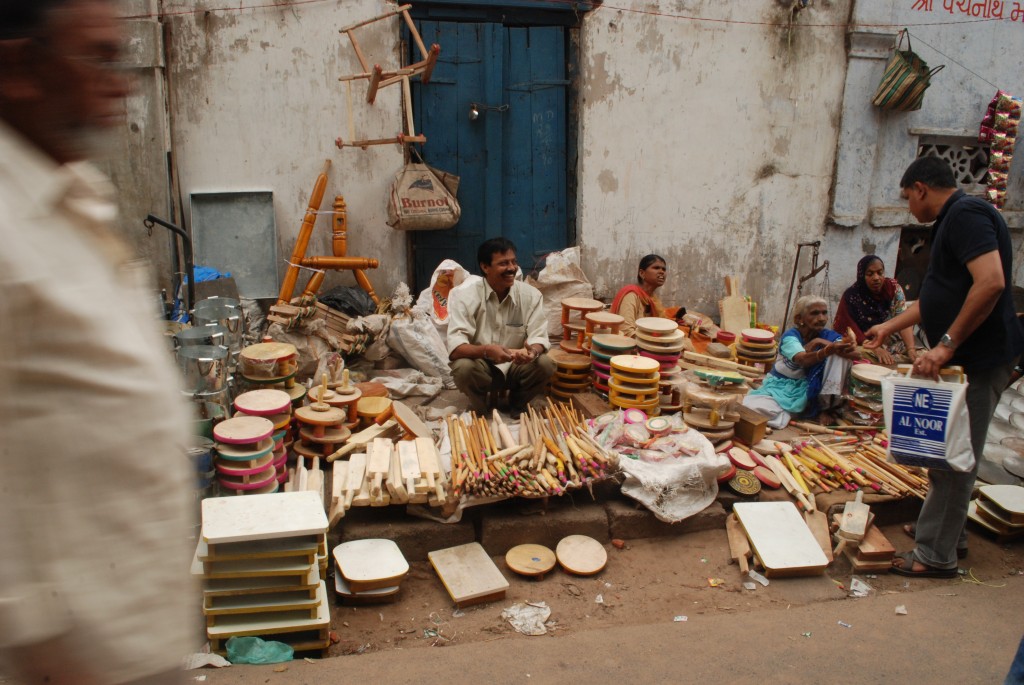 Assembly: Mainly Nylon Tarpaulin sheets. Newspaper and cloth is also used.
Application: Spread on the ground to display products. Also used for packaging the products for easy transport.
Interaction: Vendors sit on the sheet itself or on a stool next to their wares. Customers can buy goods from all sides, but due to the proximity with other stalls, mainly one side is used.
Products Sold: It is the easiest and the cheapest form of display; hence it is used the most.
Location: All over the market.
Raised Surface/Plinths
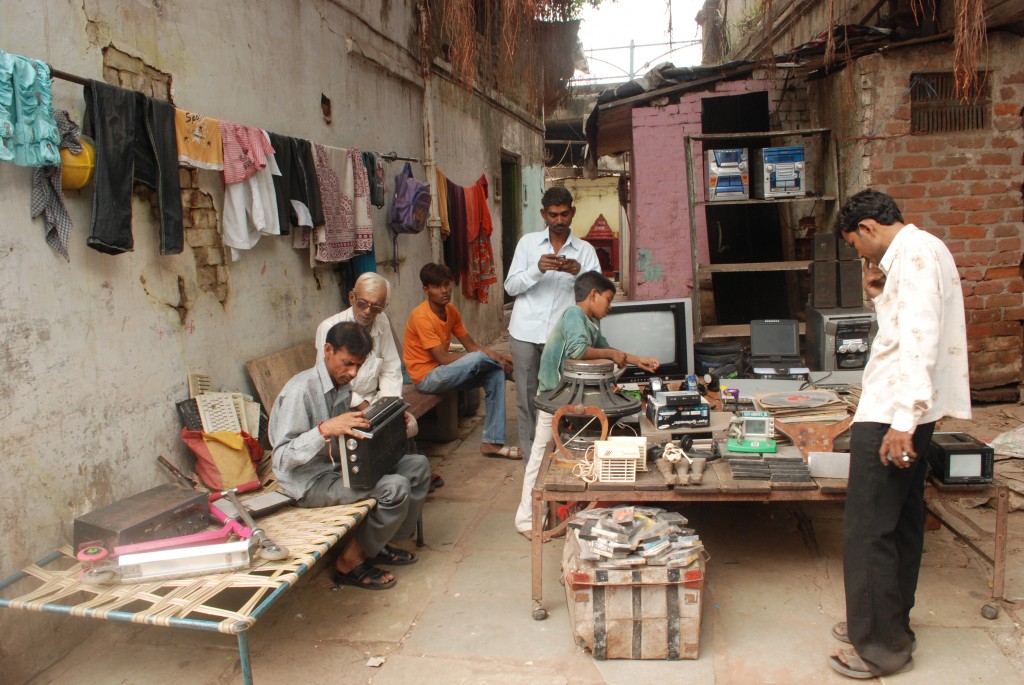
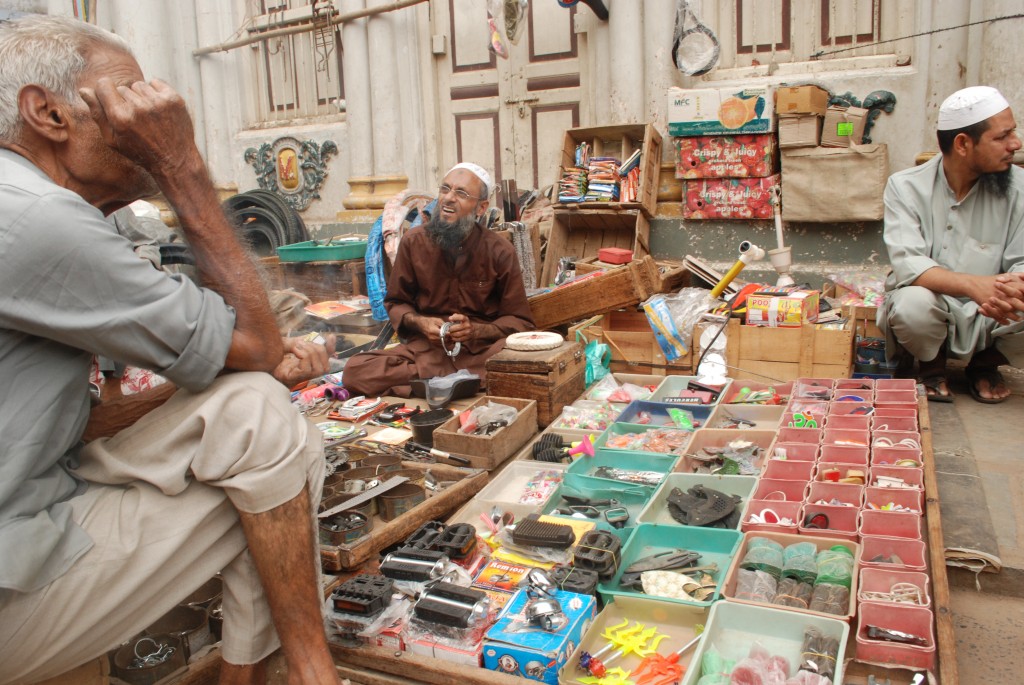 Assembly: Wood/plywood/metal sheets/metal frameworks.
Application: Used in the market for Display. Some table stands are temporarily constructed solely for the duration of the market.
Interaction: Vendors sit on stools or stand around the tables. Customers mainly interact with vendors from one side.
Products Sold: Mostly small products which can be easily packaged for transport.
Make-shift Displays
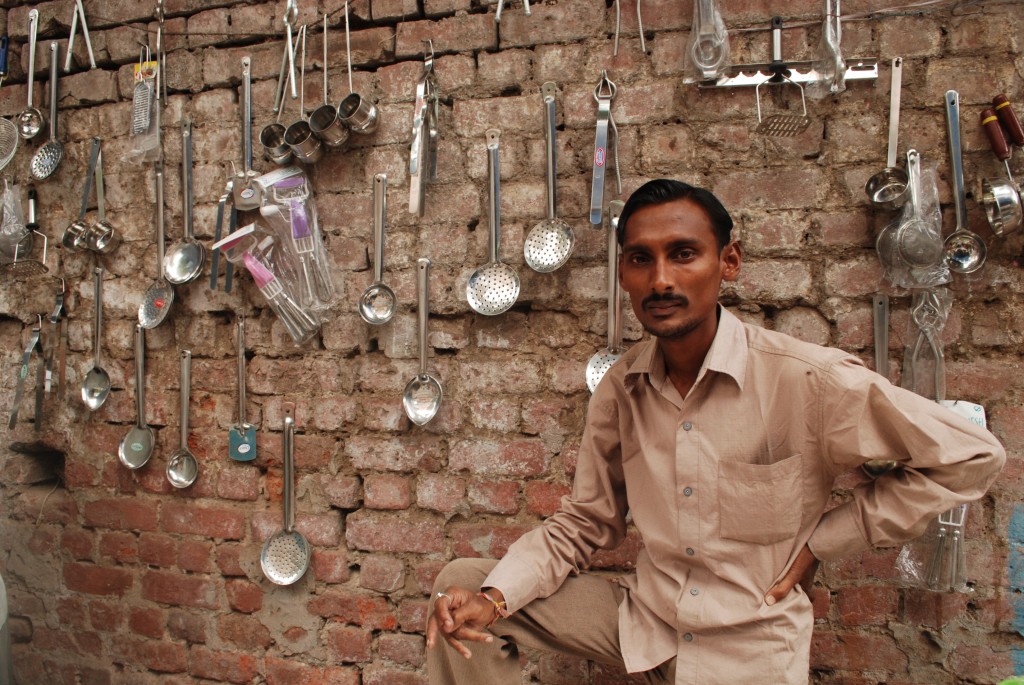
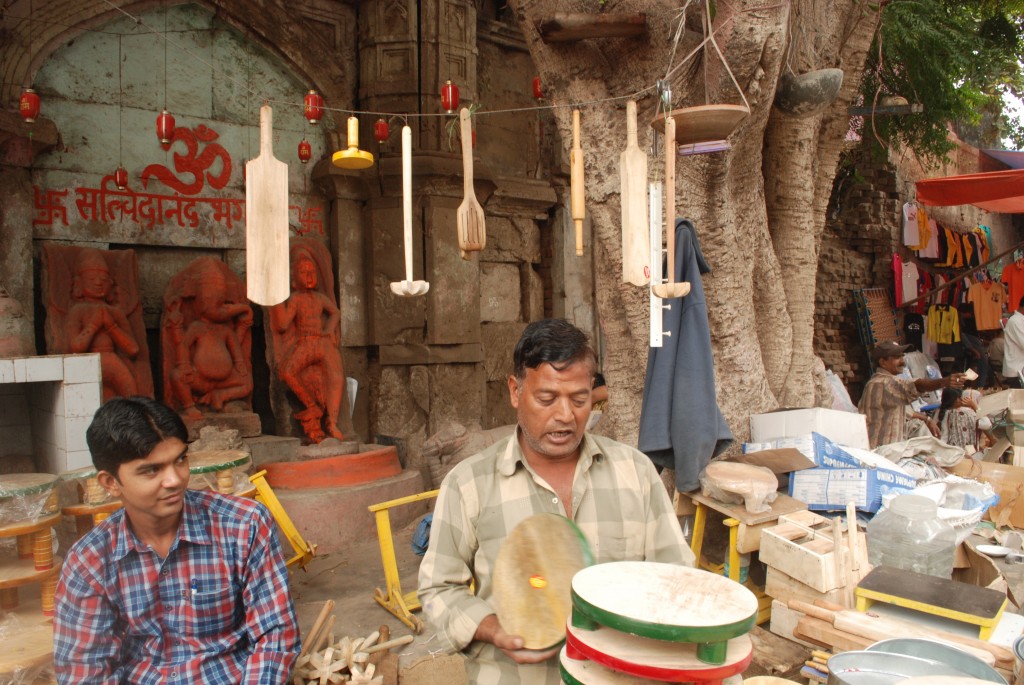 Material: Uses existing ground surfaces (sand, stone etc.) or the walls.
Application: Least used in the market, sue to inflexibility and fit for niche products.
Interaction: Vendors sit on stools, on the ground or stand. Customers interact with vendors from all sides.
Products sold: Mainly large products which need vast amounts of space.
Shelters and Canopies
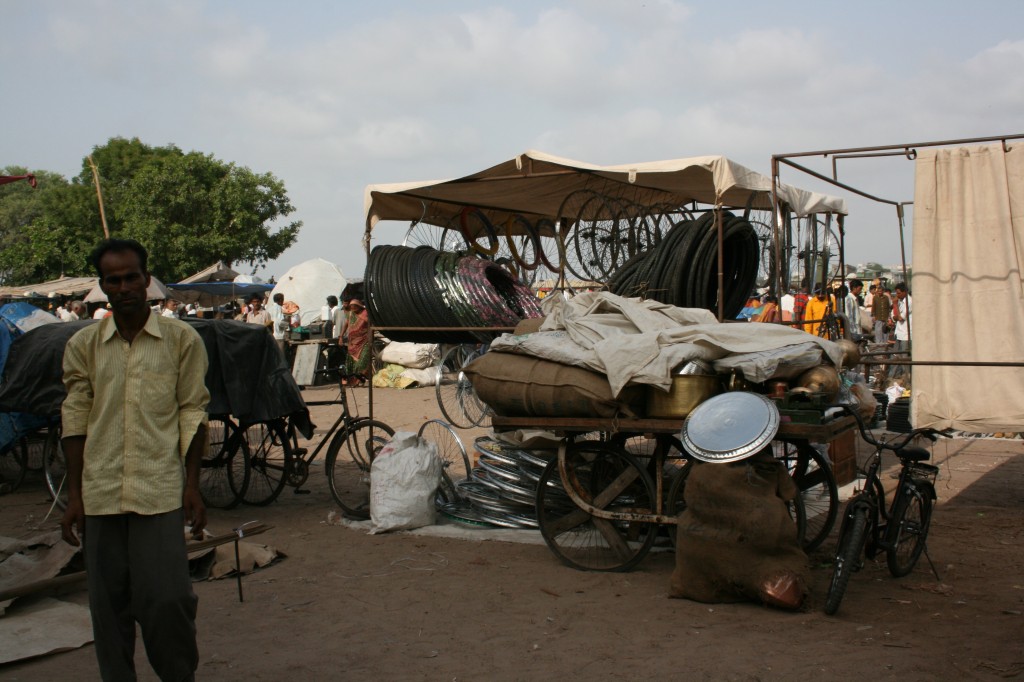 Material: Tarpaulin sheet/cloth and bamboo for supports.
Application: Used to shelter stalls from harsh sunlight and rain.
Interaction: Vendors tie sheets to bamboo sticks which are inserted into the ground. The shade provided shelters the stall and the customers standing around it.
Part of the Gujari Bazaar record · originally published 2011–2013 · site restored 2026