Home › Threats › Threats & Intangible Cultural Heritage
Threats & Intangible Cultural Heritage
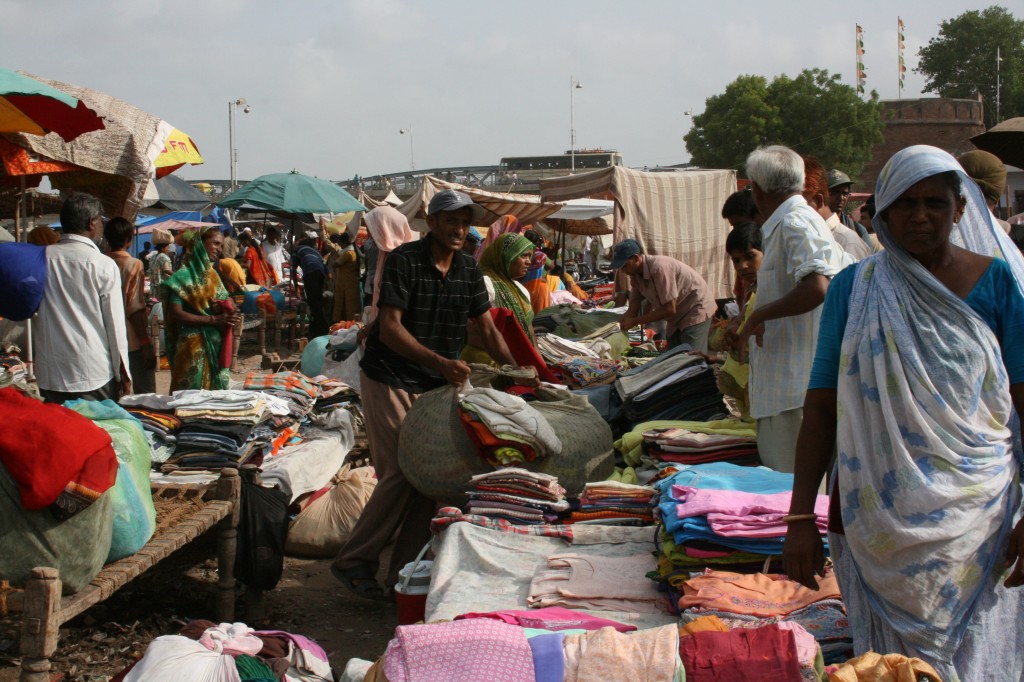
Cultural heritage has become a major metaphor in Ahmedabad to mobilize foreign investment, visitor attractions and the hospitality/tourism industry. Much of the focus of Ahmedabad’s attention to ‘heritage’ has been exclusively to built forms – old city walls, places of worship, traditional merchants homes and some important selected monuments towards which investment has been channeled. This has come at the expense of community spaces that intersect and integrate living, work, ritual and celebration.
Gulbai Tekra, a 160 year old community space settled by migrants from Rajasthan in the 1840s, now overtaken by the city, has experienced the loss of habitat, livelihood and sacred shrines. Self-built studios and homes have been demolished and skilled artisan and their families evicted, causing a near breakdown of the community life which facilitated its colorful vibrancy and celebrated diversity. These are the cherished values and attributes that seek protection under the broad framework of Intangible Cultural Heritage, but which have come under heavy threat forcing communities to make representations on their own to UNESCO, and take recourse to human rights lawyers for their struggle for.
The Gujari Bazaar is another remarkable element in Ahmedabad’s community or intangible heritage. It is not simply a collection or agglomeration of sellers. It is not a set of uniform permanent stalls inhabited by sellers of knick-knacks or leisure goods. Nor is it a stereotypical flea market. It operates at low cost, with minimal barriers to those who engage in informal productive livelihoods, and facilitates resilient relationships of exchange and interaction beyond economic transactions alone. The interlocking and flexible chains of its operations cannot simply be replaced by a designed space to fit in a fixed number of stalls, the latter is what has been proposed in passing by the Sabarmati project agency. It misconceives the market to a aggregation of sellers alone without a thorough comprehension of its intangible traits that have evolved over centuries and still make it more viable than modern shopping malls.
Part of the Gujari Bazaar record · originally published 2011–2013 · site restored 2026