Home › Current Situation › The Dark Side of Planning
The Dark Side of Planning
The closely connected fields of planning and public policy have undergone remarkable transformations in the past 2 decades. Primarily driven by theoretical analysis of failures of technocratic forms of decision-making, alternative frameworks based on democratic practice and civic participation have gained greater currency. Beginning with Rittel and Webber's (1973) path-breaking work on ‘wicked problems’ demonstrating that planning and public policy are inherently and intensely political activities, widespread empirical evidence in both developed and developing countries shows a proclivity towards democratic reforms that seek to empower citizens and re-balance the authority of elitist hierarchical institutions. From citizens juries, consensus conferences, participatory budgeting to social audits, user-based compliance monitoring, public hearings and social assessments, a vast myriad of democratic practices has enriched the multi-level decision process in progressive democratic societies.
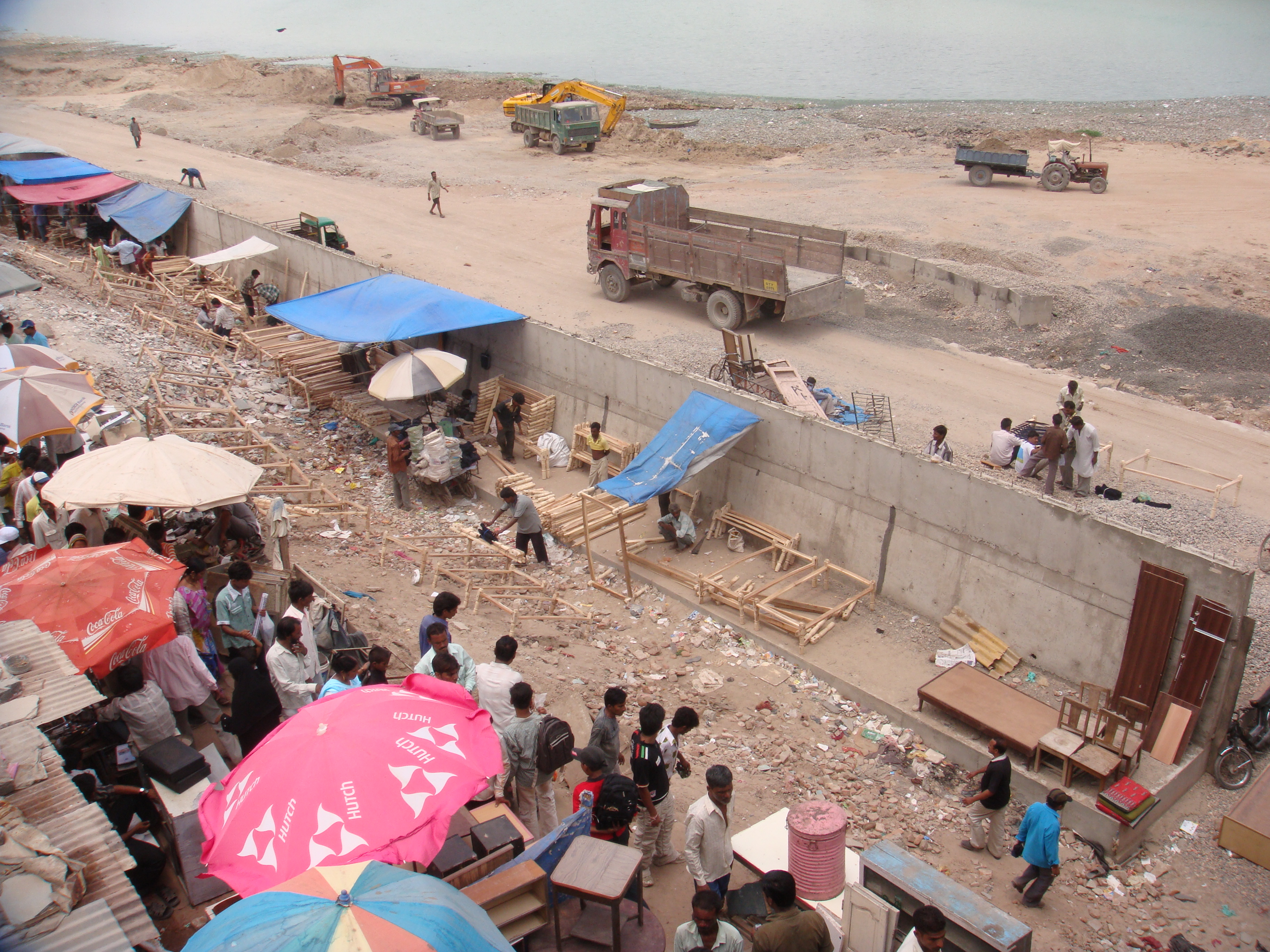
The Ahmedabad Gujari Bazaar is a significant symbol at the core of Ahmedabad's social and economic heritage. Set in the context of urban renewal in Ahmedabad, the Gujari Bazaar is an example of the ongoing conflicts concerning the displacement of habitat and livelihoods of the vast population of Ahmedabad’s poor informalized citizens. The Ahmedabad Gujari Association, a centuries-old elected association that governs the market, has been excluded in the formulation of the Sabarmati Riverfront Development Project for 13 years, with no official plan for their relocation made public or available to them.
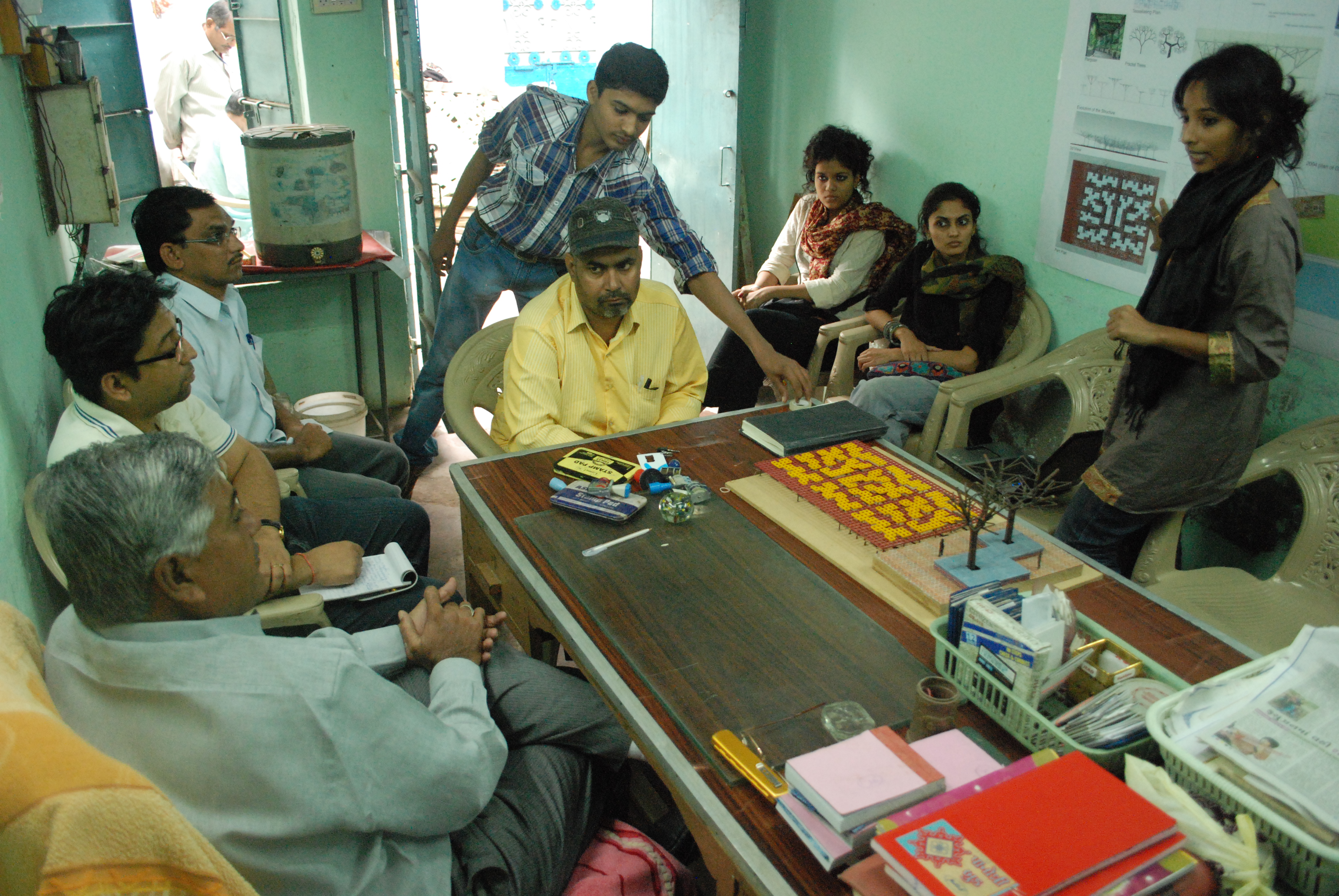
As an outcome of the collaborative research coordinated by the Indian Institute of Management, the AGA initiated a community planning process to design their own modernization and upgradation plan facilitated by experts from the National Institute of Design (NID), Ahmedabad. The AGA team, assisted by researchers and designers, has presented their 'community plan' and has demonstrated that a participatory process is feasible and necessary to protect and conserve a vital part of the city's heritage. This activity also seeks to raise public discussion about the acceptance of a democratic planning practice in Ahmedabad's future imagination as a mega-city and the growing conflicts concerning the public’s right to public resources and public space. Through this activity, they sought constructive comments and participation towards further improving and finalizing their community plan.
Part of the Gujari Bazaar record · originally published 2011–2013 · site restored 2026